Friday, December 2, 2011

Los Argentinos: Los queremos que creer en Dios

Recently there was a front page story on a local newspaper, El Argentino:

"Messi cree en Dios." (Messi believes in God)

Messi is the top Argentine soccer player (I would argue of ALL time, but fans of others would beg to differ!) Messi plays for Barcelona, and has been awarded the FIFA World Player of the Year for the past two years (with two other second place wins.)

ANYWAY, I thought the article sounded interesting, so I flipped to the page where the full story was listed. Here's what it said, "Messi still believes that Maradona was a much better footballer than he will ever be..."

I was saddened to read the article. On one hand, I was blessed by the fact that one of the greatest players in the world is so humble. On the other hand, however, I am heartbroken for the fact that people of Argentina consider a man, Maradona, to be God.

For those of you alive in 1986, Diego Maradona was responsible for the infamous "Hand of God" goal that allowed Argentina to beat England. The referees missed the handling, but everyone else in the world could see it. Maradona, for decades, argued that he never handled it: if someone handled the ball, he argued, it must have been God. Maradona has had countless problems since, from alcohol to drugs.

However, he is still considered a role-model by most Argentines. His jerseys are seen everywhere. In fact, here is a picture on a building not far from our home
:

Despite all of his problems, many Argentines would love for their children to be just like Diego. Here is something written by the Houston Chronicle:

"To understand the gargantuan shadow Maradona casts over his soccer-mad homeland, one has to conjure up the athleticism of Michael Jordan, the power of Babe Ruth – and the human fallibility of Mike Tyson. Lump them together in a single barrel-chested man with shaggy black hair and you have El Diego, idol to the millions who call him D10S, a mashup of his playing number and the Spanish word for God."

In fact, many people here call Diego "Dios." He IS God to many of the Argentine people. There is even a CHURCH OF MARADONA! In Rosario, Argentina, locals organized the parody religion of the "Church of Maradona". The organization reformulates many elements from Christian tradition, such as Christmas or prayers, reflecting instead details from Maradona. It had 200 founding members, tens of thousands more have become members via the church's official web site. (Wikipedia)

Welcome to Argentina. The people here jokingly say that they go to church each week; it just happens to be a soccer stadium! They sing songs of praise and worship, they boo "the devil" (the other team's players or the referee), they sing about victory and triumph, sadness and pain. There is laughter, joy, sadness, and lament.

While I love juego hermoso (or juega bonitazi for my Portuguese friends), I don't live and die by the game. I am a fan (hincha), not a worshiper. I love watching the beautiful game, but it isn't a religion.

My prayer is that all Argentines will believe in God, that they can come to know him more and more. The true God, not the gods that men make for themselves or make out of themselves. May they come to know him more fully, wonderfully, and beautifully.

God bless each of you!

Sunday, October 23, 2011

Religion in Buenos Aires (Part 2)


Ayudános, Madre, en nuestra hora de necesidad...


These words adorn many shrines found throughout the country.

On October 1st, a large procession of people set out from Buenos Aires to the city of Lujan, almost 80 km away (50 miles.) Over 100,000 people make the pilgrimage from the capital to this religious site in honor of the Virgin of Lujan. According to the legend, the Virgin was in a cart being carried from Peru to Brazil, but the cart mysterious stopped in Lujan and wouldn't go any further until the Virgin was removed. There she stayed, and a belief was built up around her. Six million people visit the catedral in Lujan every year to pay homage to the Virgin.

In a recent posting we talked about the role of Jesus in South America. Jesus is the crucified Savior, but is rarely shown in the glory of the resurrection. Jesus is always shown dead, hanging on the cross with a wound in his side.

More important in Catholicism is the role of Mary. Mary, the Mother of God, the perpetual Virgin, the bearer of God and the bringer of help and care. It is believed that Mary has a special, direct connection to Jesus and God. Hence the "Hail Mary."

Hail Mary, full of grace, the LORD is with Thee.
Blessed art thou among women, and blessed is the fruit of they womb, Jesus.
Holy Mary, Mother of God, pray for us sinners now and at the hour of our death.

The text comes from various passages within Luke's Gospel, as well as some final remarks about praying for us. If Mary has a special, direct line to God, then she would be the first person they would want to pray to in order to get their hopes, desires, and wishes fulfilled.

More important, however, is the concept of "The Virgin." It is rare to see Mary's name actually invoked; rather, there are dozens of shrines to "the Virgin." The idea of Mary's perpetual Virginity is an important concept in South American Catholicism. Although not a pronounced in Argentina (as opposed to places like Bolivia, Mexico, etc), the idea of the Virgin is an important aspect of the faith. Many trace the roots of Virgin worship to pre-Columbian religious beliefs in the strength and power of Virginity. Often, virgins were the sacrifice to the gods, because they were pure and without fault. The Virgin cultus provides a bridge that continues even into today.

You see shrines to the Virgin in every subway station. There are shrines on every corner. We pass five between our house and the church building (and there isn't even a Catholic church on the way!) Two are dedicated to the Virgin of Lujan; one is dedicated to the Giving Mother; another is dedicated to the Virgin of Guadeloupe; and the other is simply generic.

All this for a woman who is given very little mention in the Bible. Yes, she is highly regarded in the beginning of Luke, and seems to come to faith after the resurrection. (The tradition states that she remains with John until her death.) However, Jesus also says, "Those who do my Father's will are my mother and brothers..."

Faith rests on Jesus Christ and his Death, Burial, and Resurrection. Let's pray in HIS name, and focus our efforts on being more like Christ. Let's ask him to help us in our hour of need, and focus on moving our lives closer to Him and the Father.

God bless you guys! Thanks for your love and support...

Monday, October 17, 2011

Updates


We passed! We passed, we passed, we passed!

Our language school ended last week, and Megan and I both did well! We both received high scores, and we are really enjoying practicing with our friends. We are both feeling more confident, although we are better with small groups than larger groups. (A few people don't mind waiting while you think through what you are saying.)

We will be continuing our language study with our fellow missionary, Jonathan Hanegan. He already gave us 100 pages of homework while he is gone to the states!

As an update to ministry... we are INCREDIBLY busy! (Estamos muy ocupados!) Here are our scheduled activities right now:
- Teaching english classes
- Studying Spanish in our spare time
- Running an English Conversation Club
- Two small English groups during the week
- English class on Sunday mornings
- Covering a small group while a missionary couple is gone to the states
- Volunteering with the youth, etc, on Wednesdays and Saturdays
- Etc.

We stay pretty busy, but we are doing well. We love Argentina and the people; we are just trying to keep our feet under us!

Sorry it has been so long since our last posting. There will be another this week. Stay posted!

Wednesday, September 21, 2011

Birthdays

It has been a "week" of birthdays.

Megan's birthday was September 10. We surprised her with a party at our apartment. We had 8 people who came over. Our friends, Jonathan and Ashley, cooked a great lunch (salad with garlis chicken), and we had cake. Gabriel, another friend, created the theme: "Disney Princess." =)

We had a great time!

Daniel's birthday was on September 19th. We went to class that morning, worked that afternoon, and then met a group of friends at Abasto, a huge local mall. (It has the only Kosher McDonalds outside of Israel.) We had dinner and cake with a large group of friends, just hanging out and talking.

And on Sunday... we had a new birth. One of the girls here decided to make Christ her LORD and Savior, and was baptized on Sunday morning. She is the niece of two of my favorite people at church, Marcello and Estella. They are a sweet couple; they picked us up at the airport when we first arrived.

God blessed us with a week of birth days. It is amazing how God brings new life into our world!

Wednesday, September 7, 2011

The Power of Stories...

Buenos Aires is both familiar and foreign to us. There are some things that seem "universal":
1. Whether you are in the northern or southern hemisphere, the TV remote still gets lost in the couch!
2. People appreciate a sincere smile or a door held open (particularly older ladies at the supermarket, young mothers on the subway, or older people trying to get in a restaurant.)
3. Meals are a good way to become more involved in people's lives.
4. Prayer is powerful
5. Hospitality is valued and loved throughout the world.
6. Lo siento/Perdón/Me culpa can cover a multitude of situations!
7. when in doubt, offer a smile. (Except to scary looking people on the subway, or people of the opposite sex who might interpret it the wrong way, or people handing you thousands of fliers as you walk down the street... On second thought, only smile towards people you know, older adults, or young children!) =)

Today, as I was riding the subway, I began to think about the power of people's stories. Buenos Aires is a sea of faces; you encounter thousands of people while walking down the street, riding in the subway, catching a colectivo, or heading towards our class or house. Each one has a story. They are loved by someone, have been hurt by someone, have deep secrets that no one knows, have a history and background.

Por ejemplo... (For example/instance):
- A young boy hands us a handwritten note in the subway, asking for money. The handwriting is an adult's, but the boy looks poorer. What's his story (his real story, not the one on the paper)? Why is this kid working at 10:30 at night?
- A young businessman takes multiple phone calls on his way to work. His shirt is pressed, his nails are clean, and his expression is haggard as he talks with each disembodied voice.
- An older man stares forlornly out of the window, watching the world pass him by. Where is he going? Is he on his way home, headed to his favorite confitería, riding the subway to pass the time because he is lonely?
- A young mother holds the hands of three small children, keeping them moving forward. She is beautiful, but looks very tired and drawn. What does she need? What would she give for someone who cares, who can understand her situation or help with a few moments of peace?
- A man sleeps on two old mattresses by the subway entrance in Primera Junta. I've never seen him beg; I've never seen him talk. In fact, I've only seen him move once. Some days he is there; others, it is just an empty mattress and a blanket. One day he slept while a pigeon sat on his mattress watching him sleep. How did he get here? Who does he have?

Who are these people? In a sea of a million faces, we can simply lump them together as la gente ("the people.") Los porteños, los argentinos, los chicos, muchas personas... Yet each has a name, a life, a story... We might not know their name, but their Father in heaven does. They might just be "that guy" to us, but to the Father they are a beloved son or daughter. They are a prodigal, needing to realize true love. Or maybe they are a returned child who recognized their need for truth, life, and the way. They might be filled with joy or experiencing horrendous pain. We simply don't know, but their Father does.

The one who began the story knows each character intimately. May we seek to influence the stories in our lives, whether we are in Argentina, the United States, or anywhere else around the world...

Friday, August 26, 2011

We are overjoyed to introduce...

We would like to introduce you to you to your new sister in Christ, Brenda Nives! Brenda is a 30 year old Colombian woman who came to Buenos Aires for better economic opportunities. She was a doctor in Colombia, and has come here to practice medicine in the future.

Brenda was invited to LST and church by another LST reader, and she began coming over the summer. She developed relationships within the church, and they became a great support system for her. She began reading with LST and studying the Bible with one of the missionaries here.

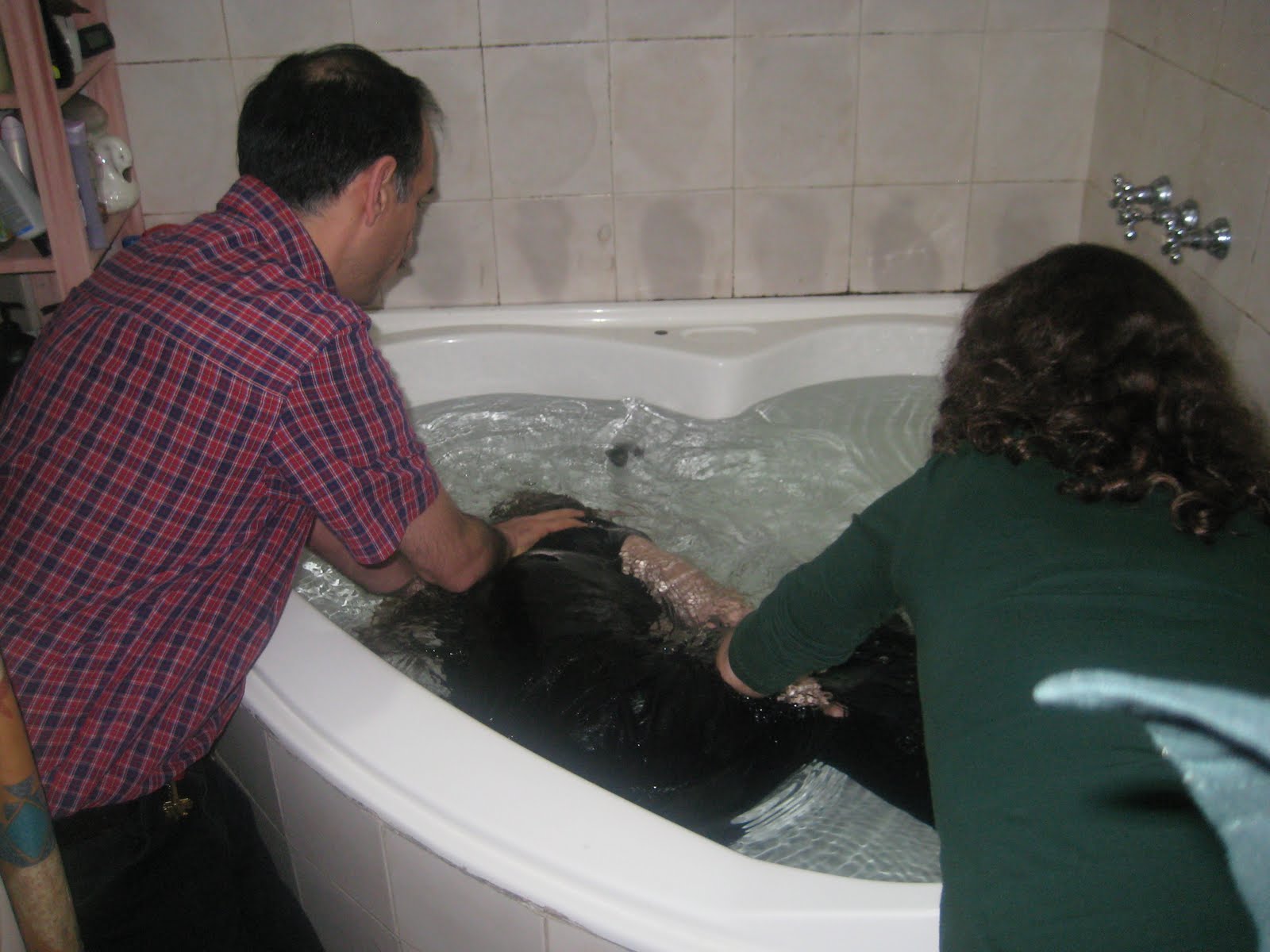
Megan began reading with Brenda two weeks ago. During their reading session, Brenda mentioned that she was thinking strongly about baptism. On Wednesday she had another Bible study, and then decided she wanted to make Christ her LORD and Savior. On Thursdays she attends the small group at the Valdez’s house, and she was baptized in their bath tub that evening while we all crowded around to witness her new birth.

God is good! I am amazed at the great things he is doing here in Buenos Aires. We have a few other readers who are interested in becoming part of the family of God; please keep them in your prayers.

We love you guys! God bless you today as you seek to follow him. Please keep us, the LST readers, the Caballito church, and the people of Buenos Aires in your prayers.


Tuesday, August 16, 2011

Jesus and living faith...


A week ago Megan and I went to the National Cathedral in Plaza de Mayo. We toured the church building, which is built to a grand scale. The paintings are by Flemish master Ruebens, each capilla is dedicated to various saints, and in the middle capilla on the right side is the tomb of San Martin, the liberator of Argentina, Chile, and Peru.

In the entrance of the catedral, to the left, is this statue of Jesus. He is hanging on a cross, recently deceased, and lit by an unnatural light. His legs are a rusted patina, where people have grabbed hold of him while praying.

Yet I often wonder if people only see Christ this way, as a figure who died and has little impact on the rest of their lives. Most Argentines claim to be Catholic, but it is nominal. Although almost everyone claims to be Christian, few people understand that this means their lives should be different. The have head knowledge (and sometimes not even that), but the heart knowledge is absent. There is very little in the way of discipleship among the general population.

One of the comments that the Caballito iglesia hears most often is, "You people are different. You actually CARE about people and want to know us, and you want us to know about God." There is something attractive about their love and grace towards people that is infectious.

La Iglesia de Cristo de Caballito believes that Jesus didn't (and still doesn't) just hang on a tree, but that he is alive and well, at the right hand of the Father in heaven. That causes us to try to live differently in our world. How amazing would it be if we would ALL live with the realization that God died for us but didn't stay dead! So, our Christian lives should also be alive and active!